AI Assisted Journalism
This article has been researched, summarized, and uniquely written by our AI editorial system based on information from Speedweek MotoGP.
After 20 years, an assessment of Colin Edwards' career, one of the most intriguing figures in the world of MotoGP, was conducted. This article examines why he was unable to achieve consistent victories, focusing on his peak period, major competitions, and technical mistakes.
Colin Edwards is considered a figure who attracted spectators in the MotoGP podium but never managed to win a championship. This article puts into focus the difficulties, team pressures, and critical moments experienced by the American racer after two decades in his career.
Peak and Pressure in His Career
Colin Edwards's MotoGP journey began with high expectations. Edwards, who stepped onto the track in 2003 with the title of Moto Superbike World Champion, lived under constant pressure throughout his career. The nature of this pressure stemmed from both personal and team dynamics. Statements made by team principal Lin Jarvis clarified this pressure. Jarvis told Edwards: "We are not expecting you to win. Our horse is Valentino. We need discipline in the paddock. You and your friend, you take a supportive role." Although Edwards admitted accepting these conditions, he confessed to facing difficulties when looking back at his career. He particularly spoke about the effects of psychological pressure: "If they hadn't put these issues on my mind, I would have performed better." This confession suggests that Edwards realized his peak performance at age 28 and was already 31 when he entered MotoGP, raising doubts about his missed potential.
Critical Moments and Regrets
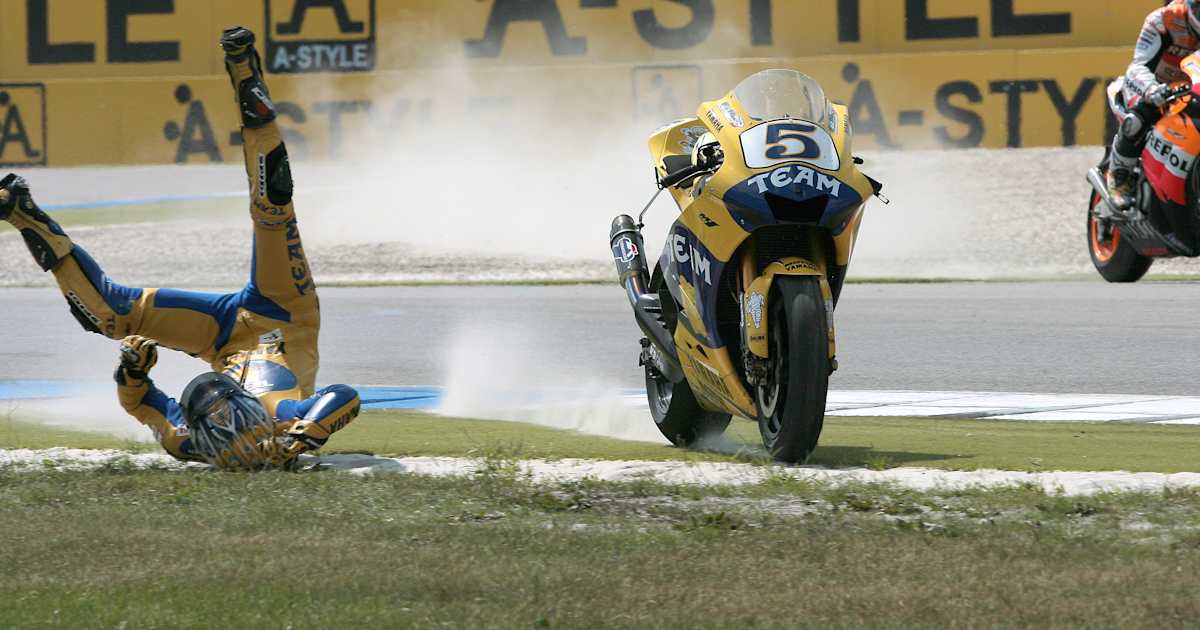
In Colin Edwards's career, the shadow of mistakes and unexpected mishaps is more prominent than that of victories. The incident during the Assen race in 2006 particularly illustrates these challenges. Leading until the end of the race, Edwards only managed to close the gap with Nicky Hayden’s effort. When a critical moment arrived, "Kentucky Kid" quickly closed the gap on Texaner heading toward the final corner. However, Edwards performed a dangerous maneuver on the final turn. As a result of this maneuver, the rider's rear wheel blew out and the Yamaha motorcycle spun out. Hayden passed him on the track and won the race. While experiencing this moment, Edwards felt deep regret: "What can I say? I know I should have won. I should have won in Assen 2006 and Qatar 2004. But I have to accept things as they are." These events show that Edwards's performance must be evaluated not only by technical skill but also by psychological resilience. At the end of his career, Edwards emphasized the difficulty of his experiences by saying, "This was hell." This feeling of regret points to the shortcomings and missed opportunities in his career.
Technical Periods and Conclusion
Edwards's MotoGP journey was a volatile spectator experience rather than a continuous ascent. In later stages of his career, failing to meet expectations, Edwards worked with different technical teams. He continued this experience by moving to the Tech3 team in 2008, lasting until 2011. During this period, his career was not solely about races; he also faced unexpected and tragic events. For example, his involvement in the death of Marco Simoncelli in an accident in Malaysia created a massive impact that shook the entire paddock. These events show that Edwards's professional life was not solely a chain of victories and successes, but also accompanied by risks and tragedies. In conclusion, Colin Edwards had a career filled with 12 podiums and zero victories in 11 years. Despite missing his peak potential, these experiences lay bare the harsh realities of the motorsport world. Edwards's story should be remembered not just as a narrative of victories, but also as a portrait of psychological pressure and technical shortcomings.
Yorumlar (0)
Bu tartışmaya katılmak için giriş yapmalısın.
Henüz yorum yapılmamış. İlk yorumu sen yap!