AI Assisted Journalism
This article has been researched, summarized, and uniquely written by our AI editorial system based on information from MotoEtkinlik.
The performance balancing system implemented in World Superbike championships has become a hot topic with criticisms that it undermines the essence of competition. Experienced team principal Pere Riba stated that the new fuel flow control system fails to balance Ducati's superiority, arguing that current technical regulations do not meet the needs of the champion.
The WorldSBK organization has begun transitioning to a new system based on fuel flow control instead of engine rev limits starting from the 2025 season to equalize performance differences between manufacturers. However, this change has reinforced Ducati's existing dominance rather than improving the power balance in the championship. While the factory Ducati team suffered double finishes in the last 18 races, the effectiveness of the technical regulations became central to the debate.
Performance Balancing Debate
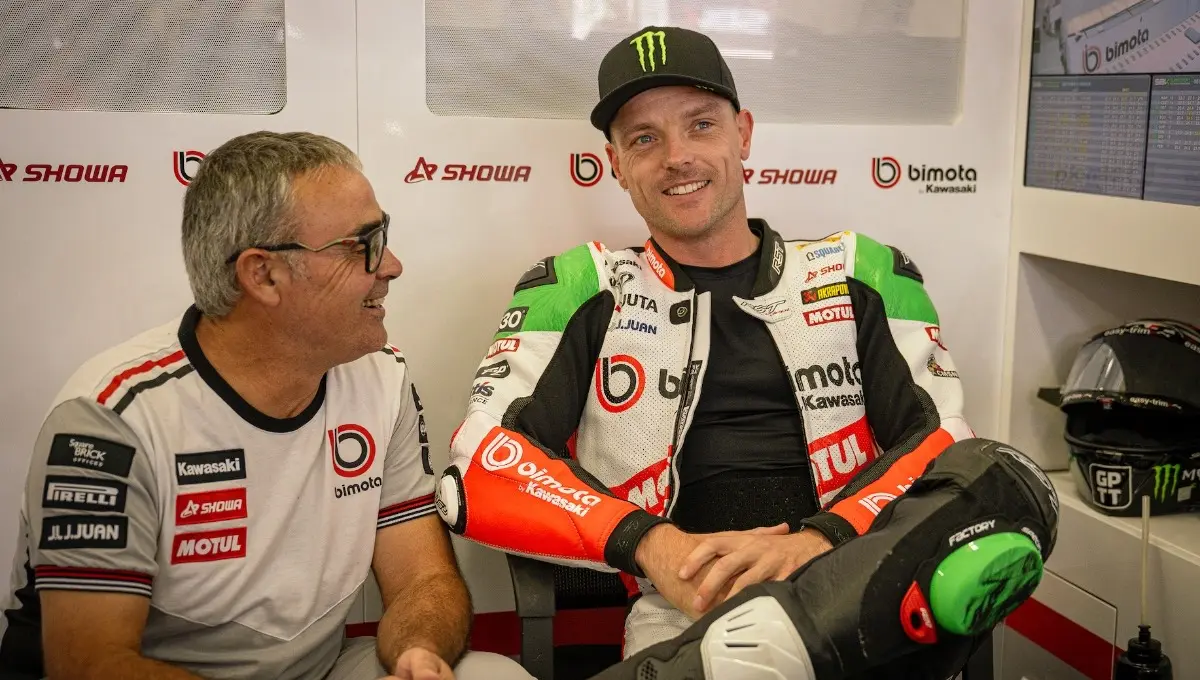
Pere Riba, who played a pivotal role in championships won by Jonathan Rea with the Kawasaki, evaluated the current situation, emphasizing that Ducati's success should not be underestimated, but the implemented balancing system is failing its purpose.
Riba approached the issue from two perspectives. The first was acceptance: "I take my helmet off, you did a great job, and you are the strongest." The second perspective focused on WorldSBK's core philosophy: the concept of performance balancing. The experienced team principal claimed that the fuel flow system, in its current form, is unsuccessful.
"They introduced fuel flow control, but it doesn't work. Everyone can see this. This type of balancing system doesn't function. The result is zero. Today, we can only compete to finish behind the Ducatis."
Riba clarified that his criticisms were not directed solely at Ducati, but focused only on the issues within the technical regulations. While acknowledging the success of the Italian manufacturer, he stated that the problem lies with the championship's technical regulations. He stressed how pronounced Ducati's current advantage is in the final period. Despite the limitations on fuel flow, the Panigale V4 R package continues to stay ahead of rival manufacturers, and the factory team's long streak of double finishes reignited the competitive debate.
The Impact of Technical Regulations
Pere Riba, who argued that the old system was more effective, believed it better balanced the differences between manufacturers compared to the current fuel flow control.
"The rev limiter system was not perfect, but it provided better balance than fuel control."
Riba also evaluated the organization through other categories. He pointed out that the Sportbike category begins in the 2026 season, highlighting that motorcycles with different engine capacities and technical architectures compete closely. He also noted that a similar performance balancing is applied in WorldSSP. "I see that the Sportbike category starts this year. 400cc motorcycles are competing against 800cc motorcycles. Their cylinder configurations, projects, and motorcycle characteristics are very different. Despite this, the races are great." However, he expressed that Superbike is insufficient for the Supersport category: "Supersport is magnificent. Superbike is not. Superbike is not a good championship today." Riba stated that the problems do not stem solely from performance differences on track; rather, the process of changing technical regulations makes it difficult for the championship to implement necessary interventions.
Criticism of the Voting System (MSMA)
Riba argued that for significant changes in technical regulations in WorldSBK to be implemented healthily, consensus within the MSMA (Manufacturers' Council), composed of manufacturers, is essential. He stressed that the current system is undemocratic, as a single manufacturer could veto all regulations. Pere Riba stated that consensus is required to change anything in Superbike, involving five manufacturers. If one manufacturer rejects changes, it leads to the freezing of the championship's technical structure.
"If one side dislikes a proposed change, they can stop everything. Everything stays where it is, and the result is before our eyes."
The experienced technical expert argued that this situation freezes the championship's technical structure. He further insisted that the MSMA must operate based on majority rule, emphasizing that a more democratic criterion is necessary. He voiced the view that if three manufacturers propose a change and two oppose it, the majority must prevail. Ultimately, Riba highlighted that the debate is not only about the technical performance of the motorcycles but also about how rules can be changed. Ducati's sustained dominance in WorldSBK and the effect of the current performance balancing system appear likely to continue being debated throughout the remainder of the season.
Yorumlar (0)
Bu tartışmaya katılmak için giriş yapmalısın.
Henüz yorum yapılmamış. İlk yorumu sen yap!