AI Assisted Journalism
This article has been researched, summarized, and uniquely written by our AI editorial system based on information from MotoEtkinlik.
KTM has officially disclosed the root cause of the engine reliability issues experienced during the 2026 MotoGP season: The source of the problem lies in supplier parts that do not meet quality standards. Motorsport Director Pit Beirer confirmed that the malfunctions stem from production and quality control processes, rather than a design flaw.
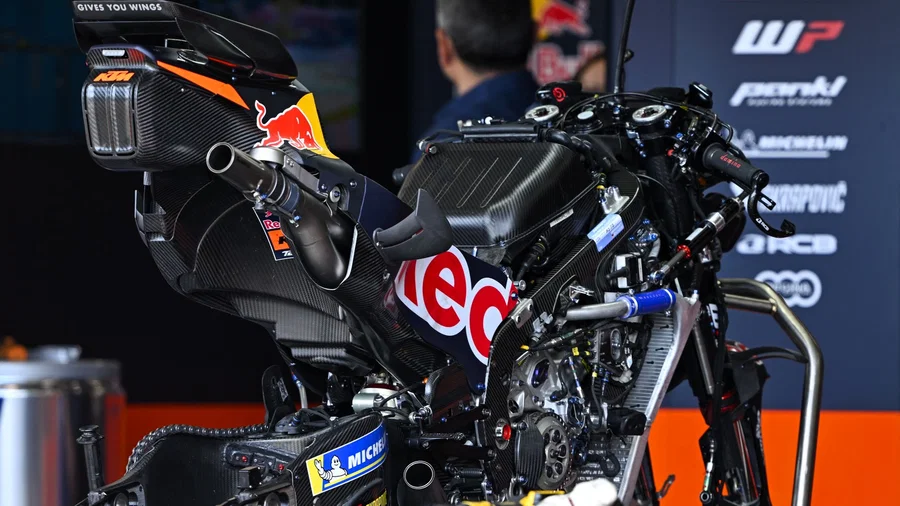
KTM, central to the competition in MotoGP, faced engine reliability issues during the 2026 season. Specifically, Pedro Acosta’s motorcycle suddenly stopping during the Catalunya Grand Prix, which led to a major accident involving Alex Marquez, seriously questioned the reliability of the RC16 engines. This situation revealed the existence of a technical problem for KTM. KTM Motorsport Director Pit Beirer clarified the source of the problem following inspections during the German Grand Prix and officially accepted that these malfunctions were caused by the quality of the supplied parts.
Quality Control Plays a Critical Role
Pit Beirer conducted a detailed analysis of the internal engine problems. The critical failures identified during the inspection showed that certain components in the power transmission system failed to meet specified quality standards. These parts malfunctioned under specific conditions. The Director stated that these critical engine parts came from a specific supplier. The investigation proved that such malfunctions would not occur when parts of the correct quality are used. KTM has thus officially accepted that the problem originates directly from production and quality control processes, not from a technical design flaw.
This situation shows that engine reliability issues are not limited to a single incident. The critical moments mentioned in the source text are as follows:
- Pedro Acosta’s motorcycle suddenly stopping during the Catalunya Grand Prix.
- A major accident involving Alex Marquez.
- Problems detected inside the engines during the German Grand Prix.
MotoGP Rules and the Necessity of Manufacturer Approval
Detecting engine reliability problems is not sufficient on its own. According to MotoGP development rules, manufacturers cannot open sealed engines that have completed homologation. Therefore, KTM filed a special application through the Manufacturers’ Association (MSMA) to allow for the replacement of faulty parts during the summer months.
KTM supported its request with technical documentation: “We submitted our special application to MSMA with detailed technical documents to allow for the opening of engines affected by controlled processes during the summer and the replacement of critical parts with correct parts that meet the same technical specifications.”
However, it is emphasized that KTM’s request will not be accepted. The process of opening and replacing engines requires approval not only from KTM but also from its rivals. Other manufacturers such as Ducati, Honda, and Yamaha must also approve these technical specifications. MotoGP rules do not permit manufacturers to change sealed engines without the joint approval of all manufacturers. While some rivals might argue that reliability issues can be resolved by reducing engine power, KTM is focusing on proving with technical data that the malfunction was caused by quality issues in parts, regardless of performance.
Rider Losses and Future Goals
Engine reliability issues resulted in significant rider losses throughout the season. According to the current MotoGP engine usage list, KTM riders were forced to use various engines during the season. These losses include:
- Brad Binder left three engines unused, ranking first among all MotoGP riders.
- Pedro Acosta could not use two engines during the season.
- Enea Bastianini did not use one engine during the season.
Tech3 KTM rider Maverick Viñales continues to use all the engines assigned to him. KTM is now looking toward the MSMA decision during the summer months. If approval is granted, the Austrian manufacturer aims to start the second half of the season with reliable RC16 engines. This development is critically important for both technical quality control and the future of competition.
Yorumlar (0)
Bu tartışmaya katılmak için giriş yapmalısın.
Henüz yorum yapılmamış. İlk yorumu sen yap!