AI Assisted Journalism
This article has been researched, summarized, and uniquely written by our AI editorial system based on information from Motorsport.com TR.
MotoGP in Catalonia Half Following 4 Critical Safety Measures
Following the horrific crash in Barcelona, discussions about safety reached a peak in the MotoGP paddock, and the weekend of the Italian Grand Prix at Mugello proved to be a sign that it was time to resolve this issue. The incident, which occurred when the race leader, Pedro Acosta, slowed down due to a mechanical failure and resulted in Alex Marquez sustaining a spinal injury, escalated further with Pecco Bagnaia’s rear wheel getting caught under Johann Zarco’s foot in the chaos at the first corner of the second start, leading to serious ligament tears for Zarco. These tragic events prompted action from the MotoGP management, and four key safety measures were identified for immediate implementation.
New Grid Layout: More Blue Zones
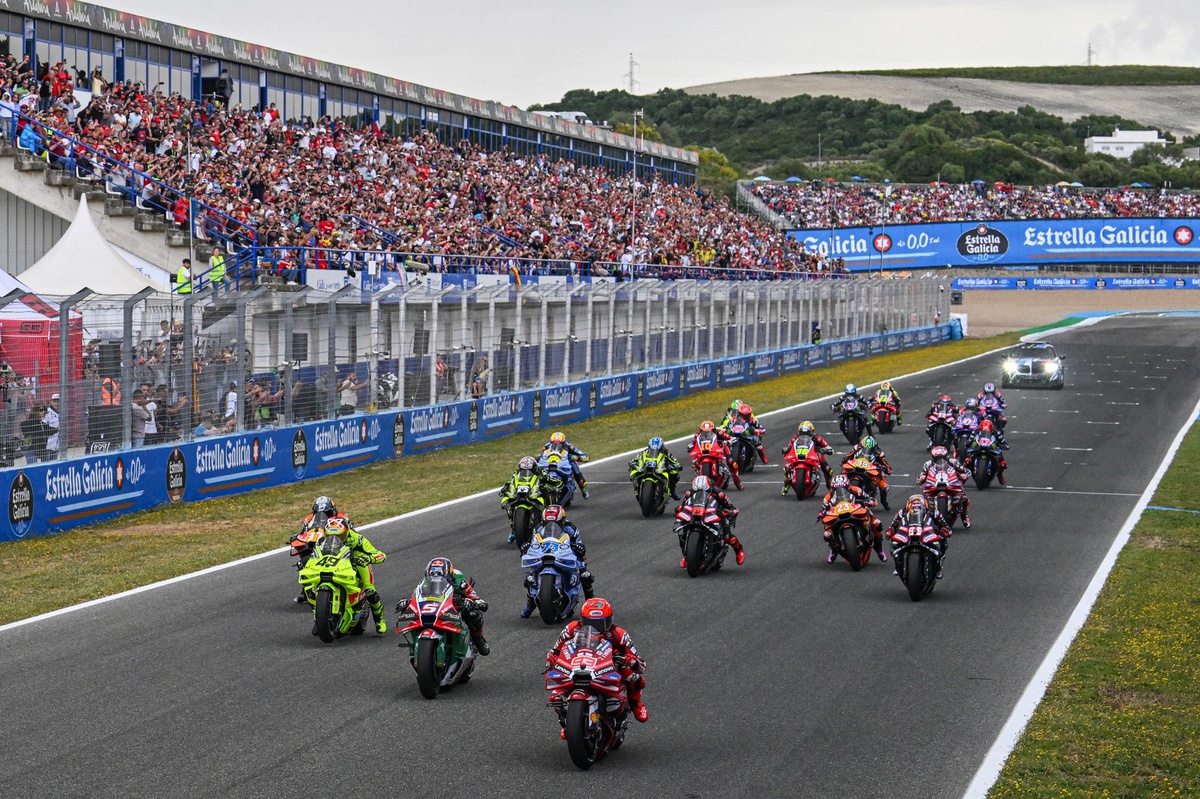
To prevent crashes at the first corner and, in particular, the intense packings at the start, the distance between the motorcycles on the grid was increased. Riders will be given a wider maneuvering area during the start and when entering the first corner. This aims to achieve a more controlled start and a safer racing environment, especially at the first corner.
“Holeshot” Devices Banned: Early Implementation
The ban on “holeshot” devices, which push motorcycles forward to allow the wheels to rise during the start, was postponed until the new regulations in 2027. However, the crash risks caused by these devices at circuits such as Silverstone and Phillip Island prompted the MotoGP management to make an early ban decision. The offer made to manufacturers envisages the immediate ban of these devices on all circuits.
Rear Wheel Protection Systems: Limb Safety
Johann Zarco’s unfortunate injury, in which he became trapped between Bagnaia’s rear wheel and the fairing, prompted the MotoGP management to consider adding protective bars or panels specifically around the rear wheel. Carlos Ezpeleta emphasized that manufacturers were receptive to this idea and that the engineering solution was not far off. This measure aims to increase driver safety by preventing limb entrapments.
Early Warning System: Safety with Technology
Following Pedro Acosta’s sudden mechanical failure, the aim is to immediately warn the following riders. The integration of the Early Warning System, which has been developed for years and requires a sophisticated GPS infrastructure, will be accelerated. Thus, when a malfunction or crash occurs in the leading motorcycle, an immediate warning light will illuminate on the dashboard of the following riders. This system aims to reduce the risk of accidents by shortening the reaction time of the drivers.
Ezpeleta concluded his speech by stating that it was not possible to make a change this weekend, but he believed that these four areas would make a huge difference in the future. MotoGP aims to increase racing safety and contribute to drivers being able to race in a safer environment.
Yorumlar (0)
Bu tartışmaya katılmak için giriş yapmalısın.
Henüz yorum yapılmamış. İlk yorumu sen yap!